
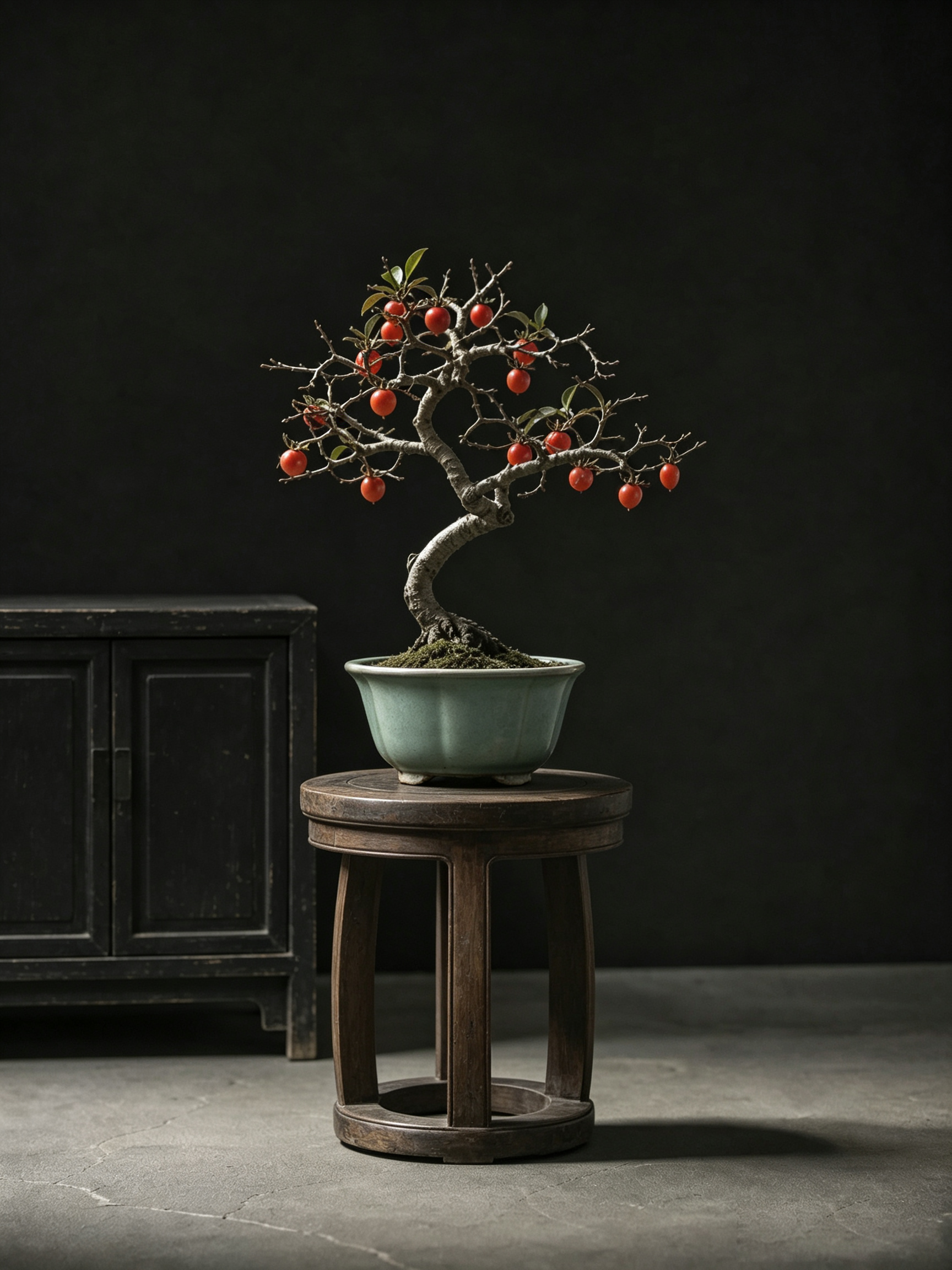
Gold Rouge
The fruit is small to medium-sized, nearly spherical to globose, with a highly symmetrical and well-rounded profile. The fruit surface is smooth, glossy, and slightly waxy, developing a vivid bright crimson to scarlet-red coloration at maturity. The fruit has a relatively full shoulder and gradually narrows toward the distal end, terminating in a small, distinct apical point. The overall fruit shape is compact, balanced, and highly ornamental.
Interested in this variety?
Contact us for pricing, availability, and shipping information.
Contact UsProduct Description
Fruit CharacteristicsThe fruit is small to medium-sized, nearly spherical to globose, with a highly symmetrical and well-rounded profile. The fruit surface is smooth, glossy, and slightly waxy, developing a vivid bright crimson to scarlet-red coloration at maturity.
The fruit has a relatively full shoulder and gradually narrows toward the distal end, terminating in a small, distinct apical point. The overall fruit shape is compact, balanced, and highly ornamental.

Calyx Characteristics
The calyx is the most distinctive feature of this selection. It consists of five elongated, lanceolate calyx lobes arranged in a pronounced star-shaped configuration.
The calyx lobes are relatively narrow and elongated, with pointed tips and a strongly spreading posture. They extend outward from the fruit shoulder rather than hugging the fruit surface, creating a clear five-pointed silhouette.
The calyx coloration ranges from yellow-green to golden green, with subtle bronze tones toward the base. This creates an attractive contrast with the mature crimson fruit.
From a cultivar-identification perspective, the combination of a five-lobed, star-shaped calyx and bright red globose fruit is particularly distinctive.
Foliage
The leaves are ovate to broadly elliptic, with smooth margins, relatively thick blades, and a firm texture. Mature foliage is medium to dark green and provides a strong visual backdrop for the red fruits.
Ornamental Value
The selection has a particularly clean and refined ornamental character:
The upright calyx architecture remains visually prominent even when viewed from above, making the calyx an important ornamental feature rather than merely a botanical appendage.
Light Environment
Full sun or partial sun, with 4–8 hours of direct sunlight daily. Morning sunlight is preferred; avoid prolonged deep shade.
Humidity Environment
Maintain approximately 50–70% relative humidity with good airflow. Avoid continuously wet leaves and poor ventilation.
Air Circulation
Good ventilation and natural airflow are essential for healthy foliage. Suitable locations include open balconies, gardens, and well-ventilated bonsai display areas.
Soil & Root Environment
Use soil with excellent drainage, good aeration, and moderate moisture retention. Recommended pH: 5.5–7.0.
Suitable Growth Temperature
Diospyros rhombifolia, commonly known as Old Crow Persimmon, is a temperate deciduous species native to East Asia.
Optimal growth temperature:
22–28°C (71–82°F). This range supports active vegetative growth, healthy leaf development, flowering, and fruit enlargement.
Tips:
Maintaining a large temperature difference between day and night during autumn is beneficial for improving fruit coloration and enhancing ornamental value.
15–22°C (59–71°F)
Ideal for bud break, new shoot development, flowering, and early fruit formation.
32–45°C (89–113°F)
The plant can tolerate warm summers if sufficient moisture, air circulation, and partial protection from extreme heat are provided. Prolonged temperatures above 35°C (95°F) may cause leaf stress, reduced photosynthetic activity, and fruit drop.
17–25°C (62–77°F)
Cooler autumn temperatures promote chlorophyll degradation and enhance the development of attractive fruit colors, including orange-red, crimson, and purple-blood red tones.
−5–10°C (23–50°F)
As a deciduous woody plant, Diospyros rhombifolia requires winter dormancy. Mature trees can tolerate temperatures approximately down to –10°C to –15°C (14°F to 5°F) when roots are protected.