
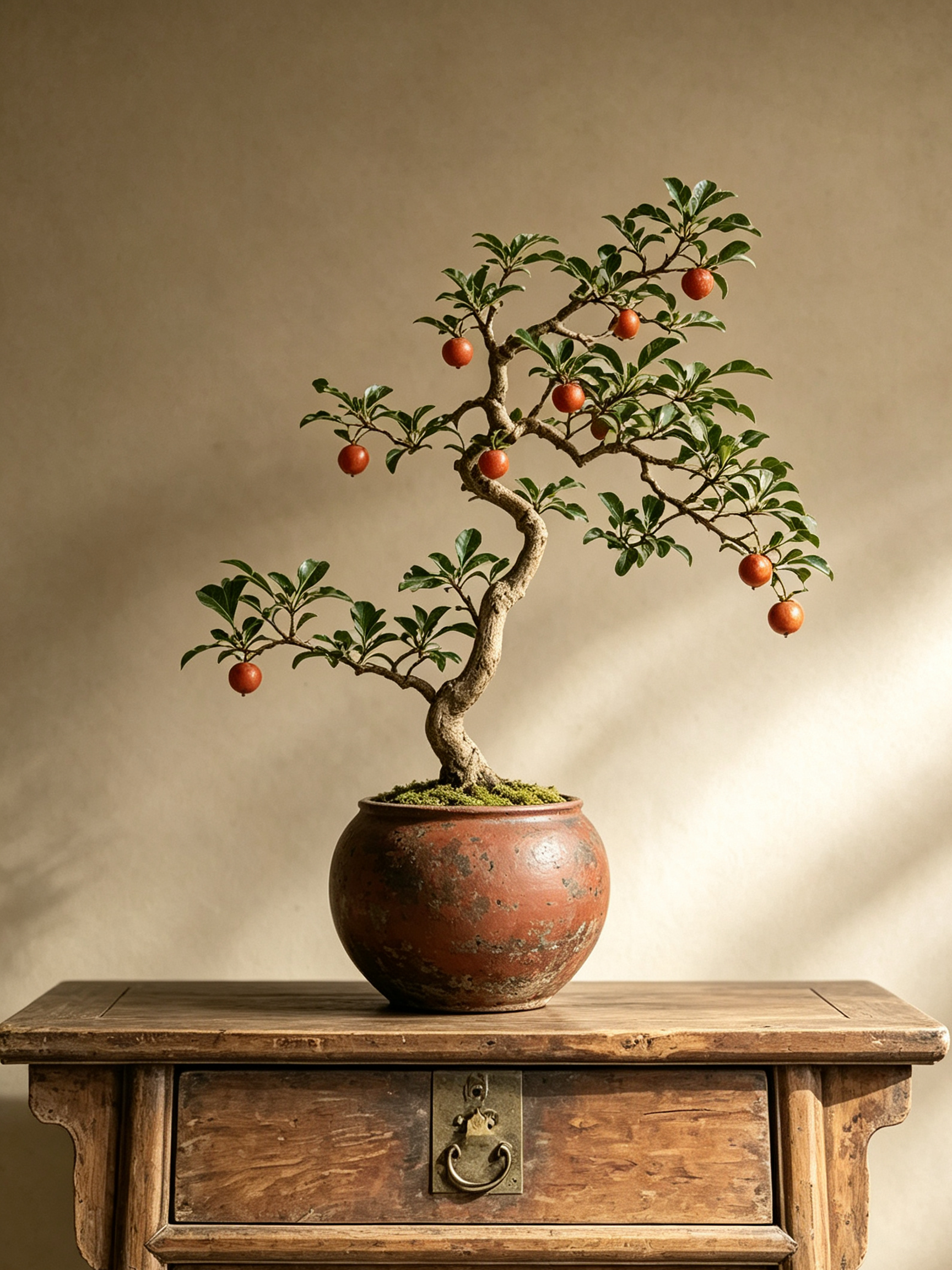
Tinya
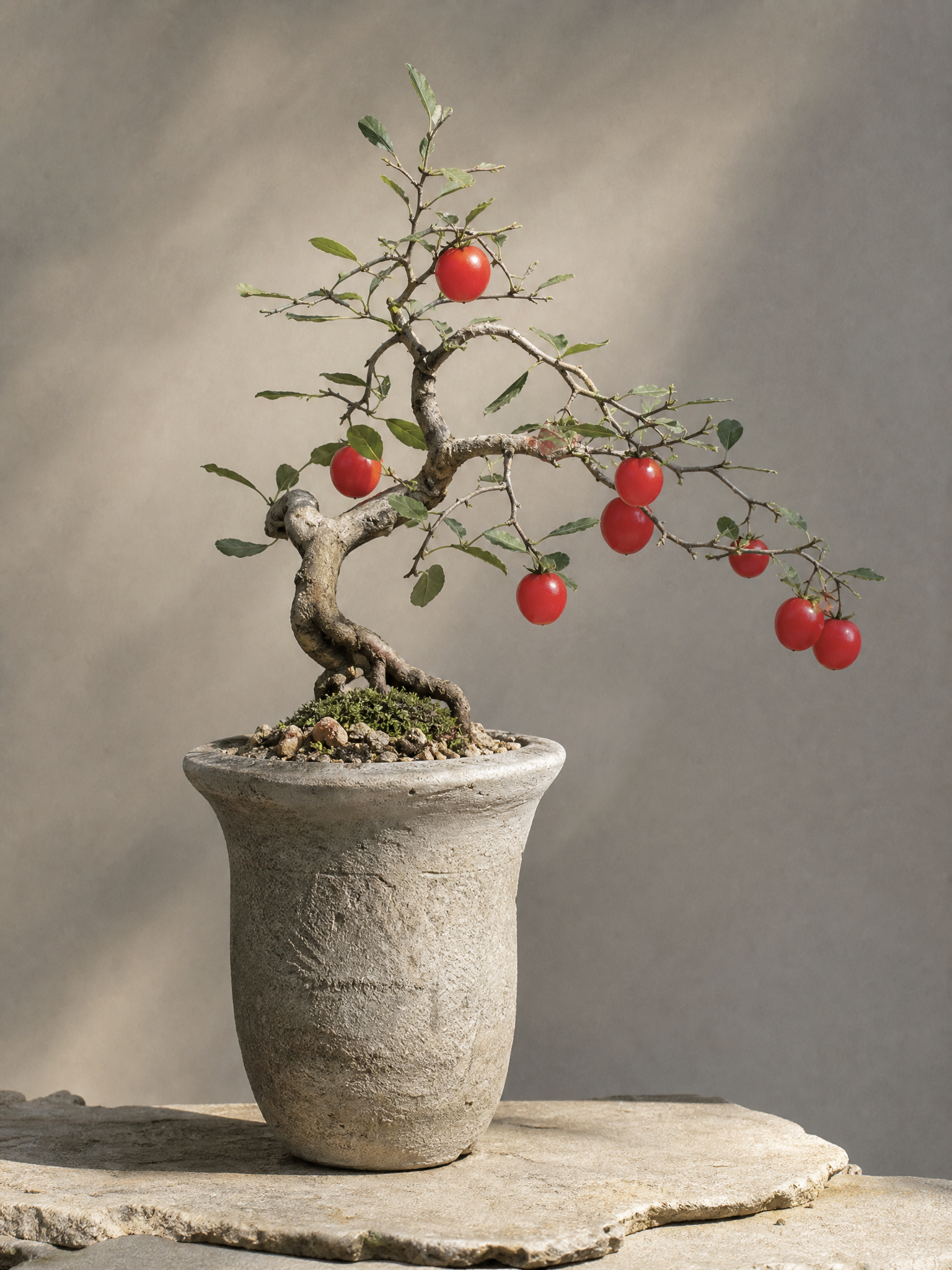
Fruit Characteristics: Small, subglobose to obovate berry featuring a glossy, rich reddish-orange to deep crimson skin at full maturity. Fine pubescent textures are visible along the fruit surface.
Interested in this variety?
Contact us for pricing, availability, and shipping information.
Contact UsProduct Description
Fruit Characteristics: Small, subglobose to obovate berry featuring a glossy, rich reddish-orange to deep crimson skin at full maturity. Fine pubescent textures are visible along the fruit surface.
Calyx Structure: A prominent, persistent four-lobed calyx (sepals) crown attached to the stem. The sepals are elongated, recurved, leaf-like, textured with fine venation, and exhibit a muted olive-green to bronze hue.
Foliage & Stems: Leaves are simple, alternate, and ovate-elliptic with reticulate (net-like) venation, smooth entire margins, and a dark green upper surface. The woody stems are slender, grayish-brown, and display fine bark lenticels typical of the genus Diospyros.
Ornamental Value: Highly prized in bonsai culture and landscape horticulture for its striking autumn-to-winter color contrast between bright red fruits and dark green or yellowing foliage.
Light Environment
Full sun or partial sun, with 4–8 hours of direct sunlight daily. Morning sunlight is preferred; avoid prolonged deep shade.
Humidity Environment
Maintain approximately 50–70% relative humidity with good airflow. Avoid continuously wet leaves and poor ventilation.
Air Circulation
Good ventilation and natural airflow are essential for healthy foliage. Suitable locations include open balconies, gardens, and well-ventilated bonsai display areas.
Soil & Root Environment
Use soil with excellent drainage, good aeration, and moderate moisture retention. Recommended pH: 5.5–7.0.
Suitable Growth Temperature
Diospyros rhombifolia, commonly known as Old Crow Persimmon, is a temperate deciduous species native to East Asia.
Optimal growth temperature:
22–28°C (71–82°F). This range supports active vegetative growth, healthy leaf development, flowering, and fruit enlargement.
Tips:
Maintaining a large temperature difference between day and night during autumn is beneficial for improving fruit coloration and enhancing ornamental value.
15–22°C (59–71°F)
Ideal for bud break, new shoot development, flowering, and early fruit formation.
32–45°C (89–113°F)
The plant can tolerate warm summers if sufficient moisture, air circulation, and partial protection from extreme heat are provided. Prolonged temperatures above 35°C (95°F) may cause leaf stress, reduced photosynthetic activity, and fruit drop.
17–25°C (62–77°F)
Cooler autumn temperatures promote chlorophyll degradation and enhance the development of attractive fruit colors, including orange-red, crimson, and purple-blood red tones.
−5–10°C (23–50°F)
As a deciduous woody plant, Diospyros rhombifolia requires winter dormancy. Mature trees can tolerate temperatures approximately down to –10°C to –15°C (14°F to 5°F) when roots are protected.